On GLP-1, what and how you eat matters more than ever. This guide covers optimizing your plate, portion sizes, protein intake, and hydration for sustainable body recomposition — the practical habits that make treatment work. If you have been weighing up glp1 qualifications for a home around Columbia, MO, this guide covers how it actually works, what it tends to cost, and where the results usually fall short.
- The Architecture of Weight Loss Nutrition on GLP-1 Optimizing Plates, Portions, Protein, and Hydration for Sustainable Body Recomposition.
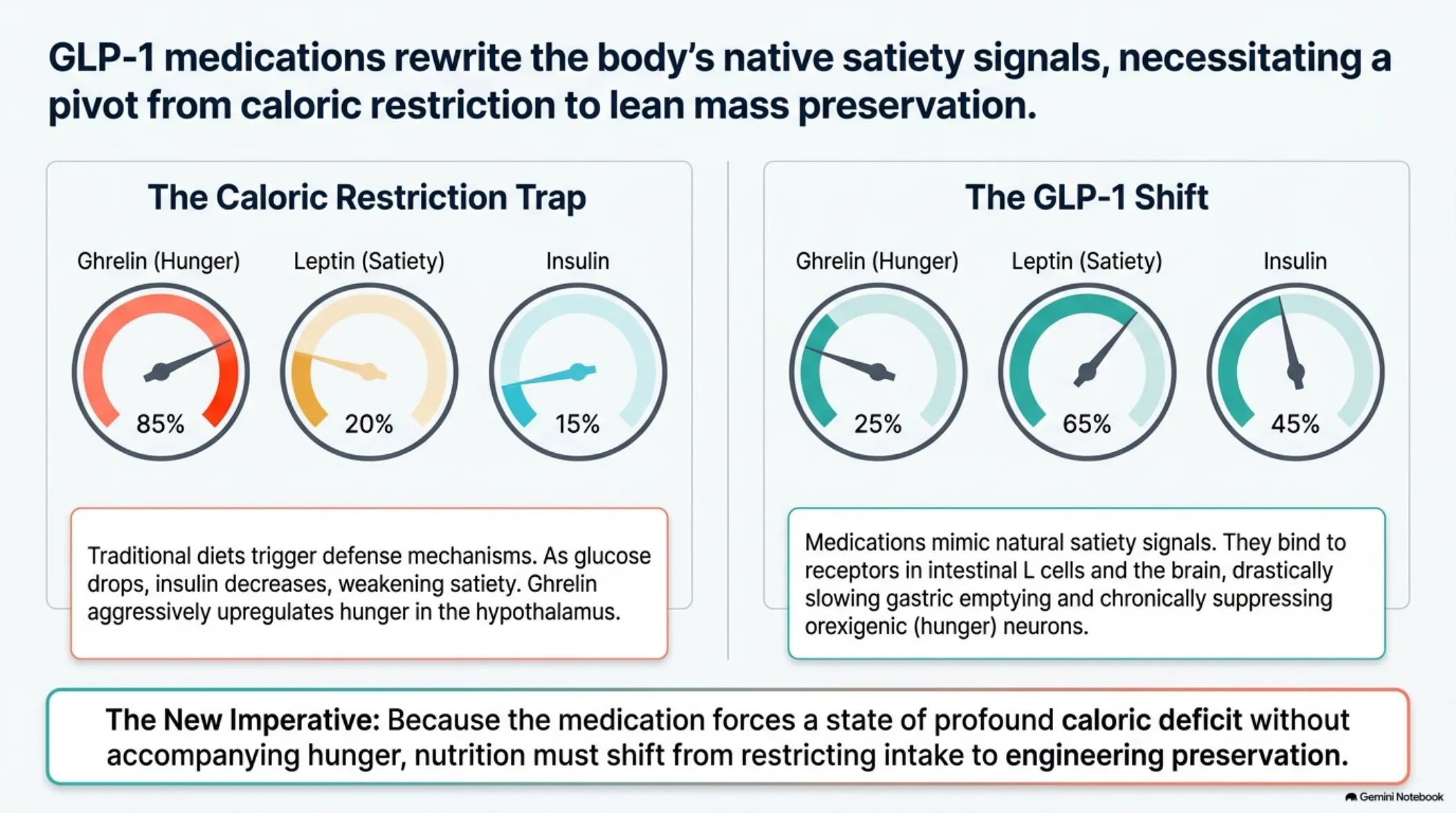
- GLP-1 medications rewrite the body's native satiety signals, necessitating a pivot from caloric restriction to lean mass preservation.
- Medications mimic natural satiety signals.
- They bind to Traditionaldietstriggerdefensemechanisms. Asglucose receptorsinintestinal Lcellsandthebrain, drastically drops, insulindecreases, weakeningsatiety. Ghrelin slowing gastric emptying and chronically suppressing….
- The New Imperative: Because the medication forces a state of profound caloric deficit without accompanying hunger, nutrition must shift from restricting intake to engineering preservation.
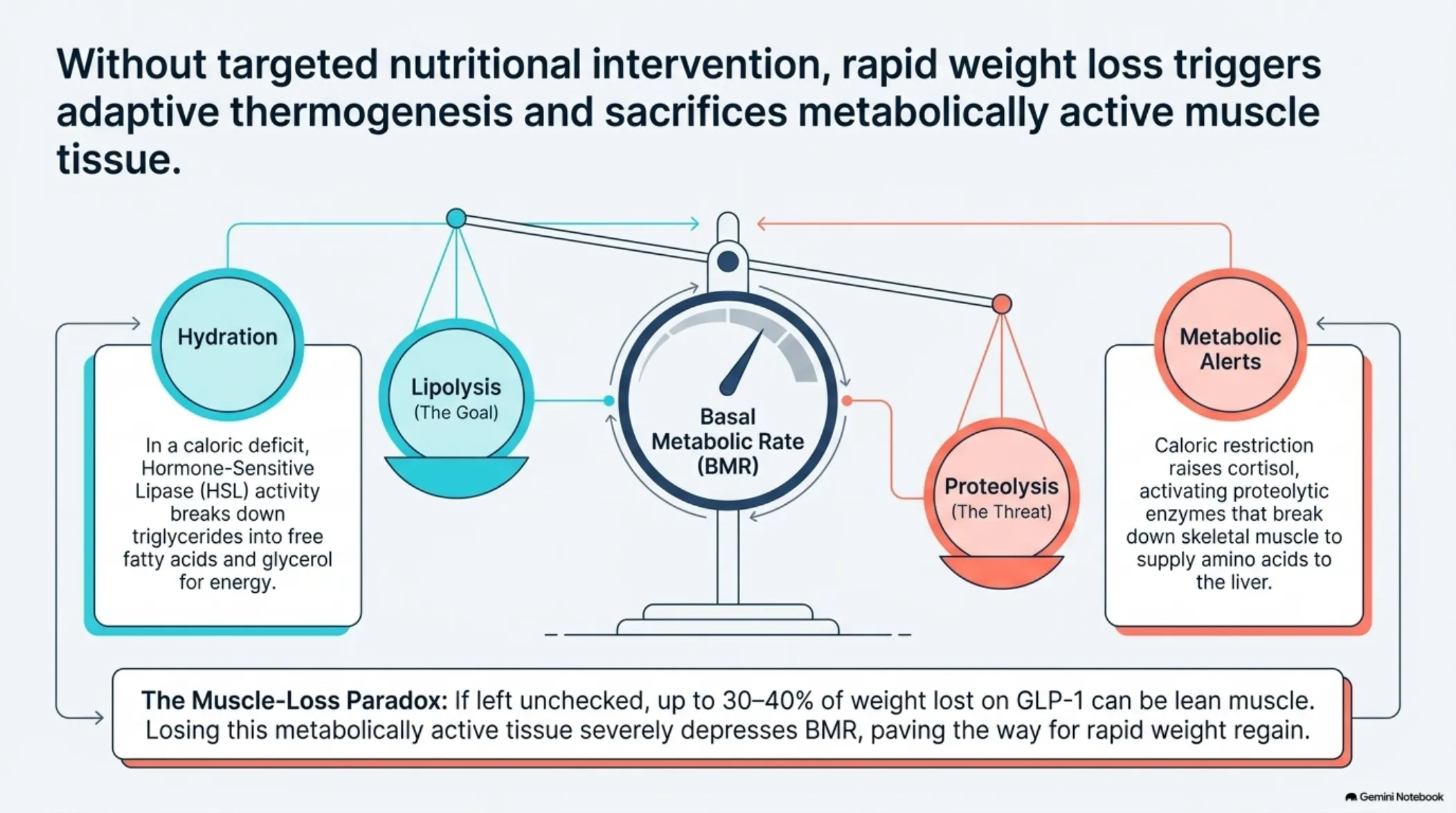
- Without targeted nutritional intervention, rapid weight loss triggers adaptive thermogenesis and sacrifices metabolically active muscle tissue.
- The Muscle-Loss Paradox: If left unchecked, up to 30-40%of weight lost on GLP-1 can be lean muscle.
- Losing this metabolically active tissue severely depresses BMR, paving the way for rapid weight regain.
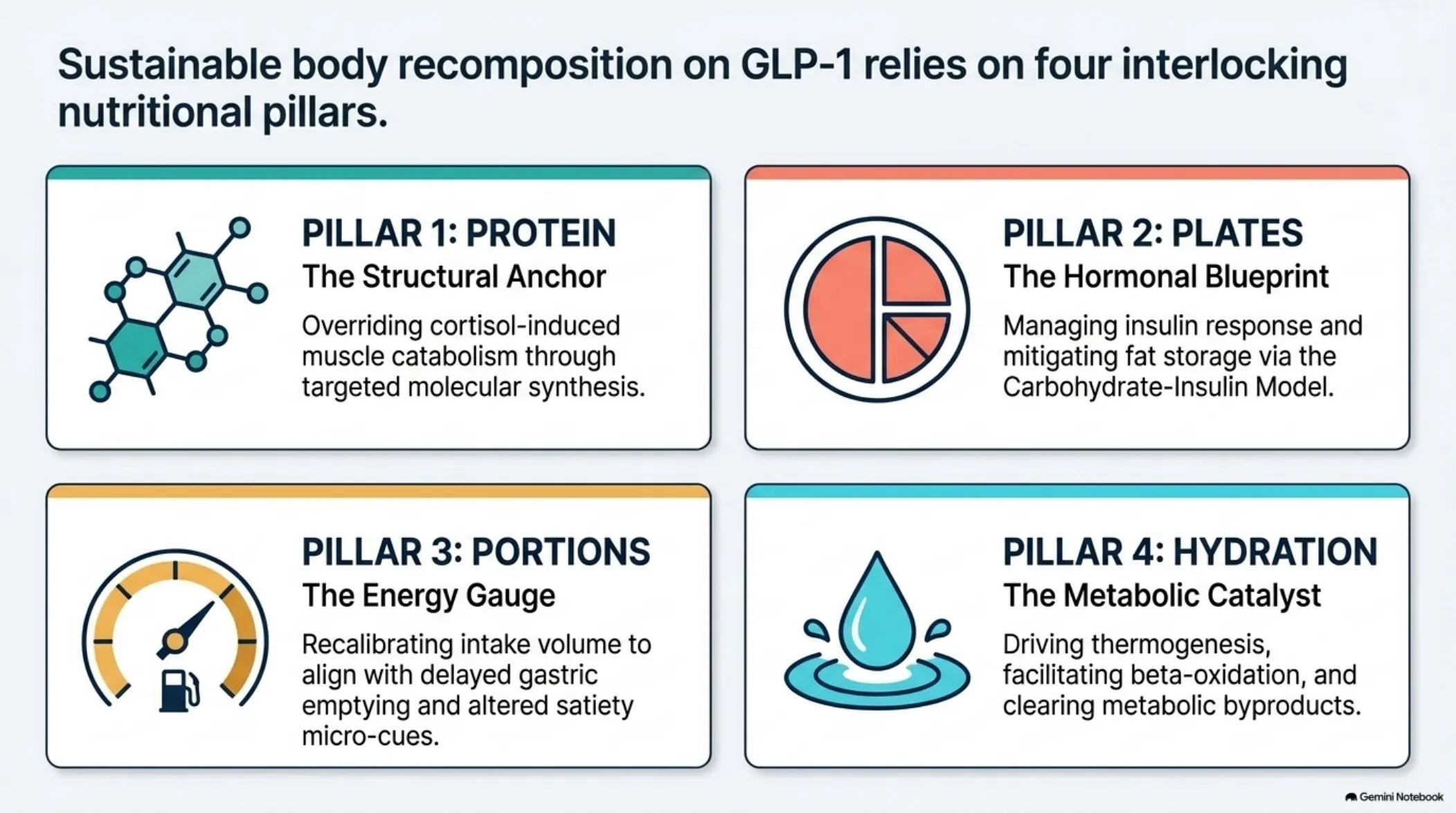
- Sustainable body recomposition on GLP-1 relies on four interlocking nutritional pillars.
- mitigating fat storage via the targeted molecularsynthesis.
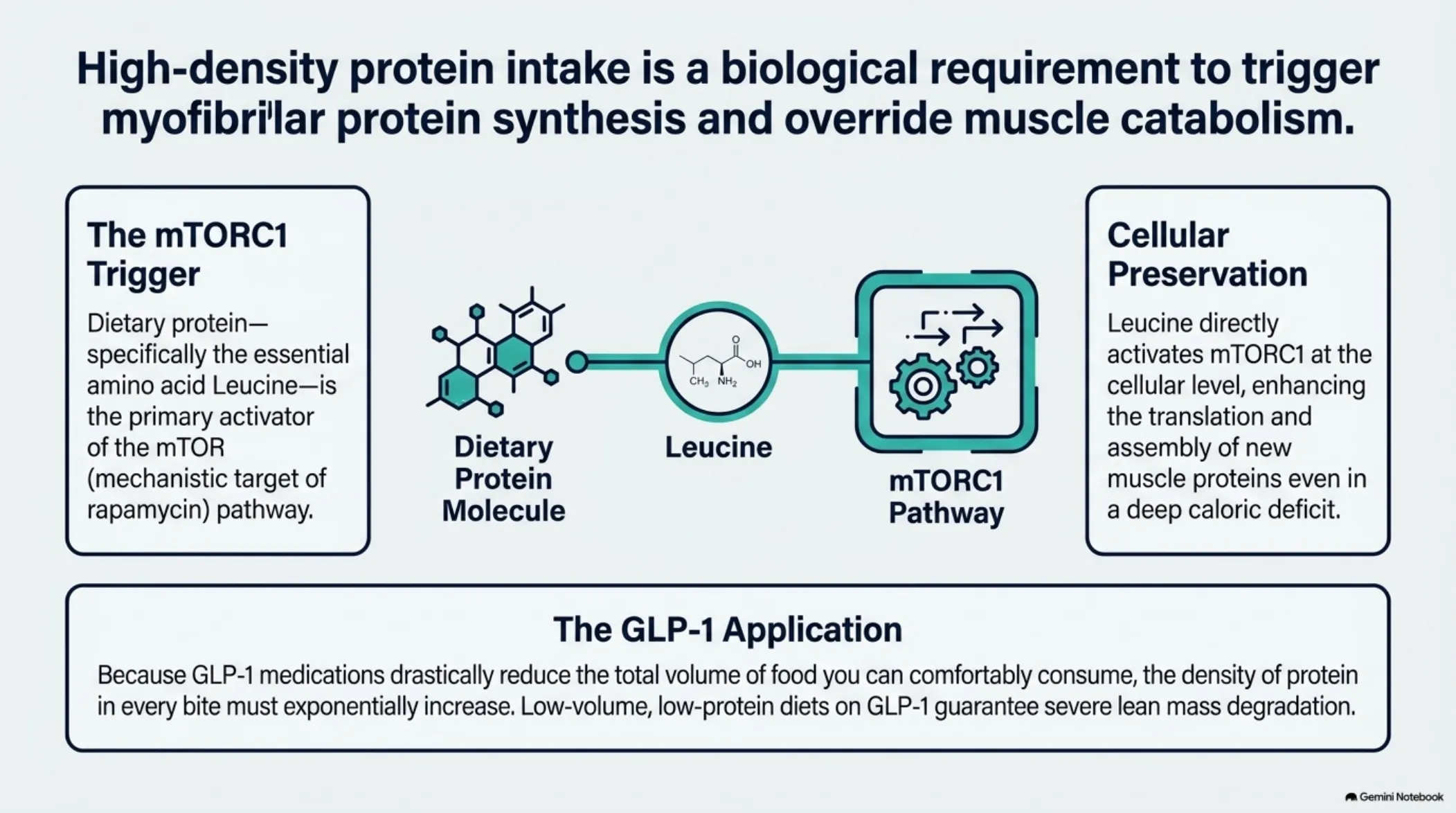
- High-density protein intake is a biological requirement to trigger myofibrilar protein synthesis and override muscle catabolism.
- Because GLP-1 medications drastically reduce the total volume of food you can comfortably consume, the density of protein in every bite must exponentially increase.
- Low-volume, low-protein diets on GLP-1 guarantee severe lean mass degradation.
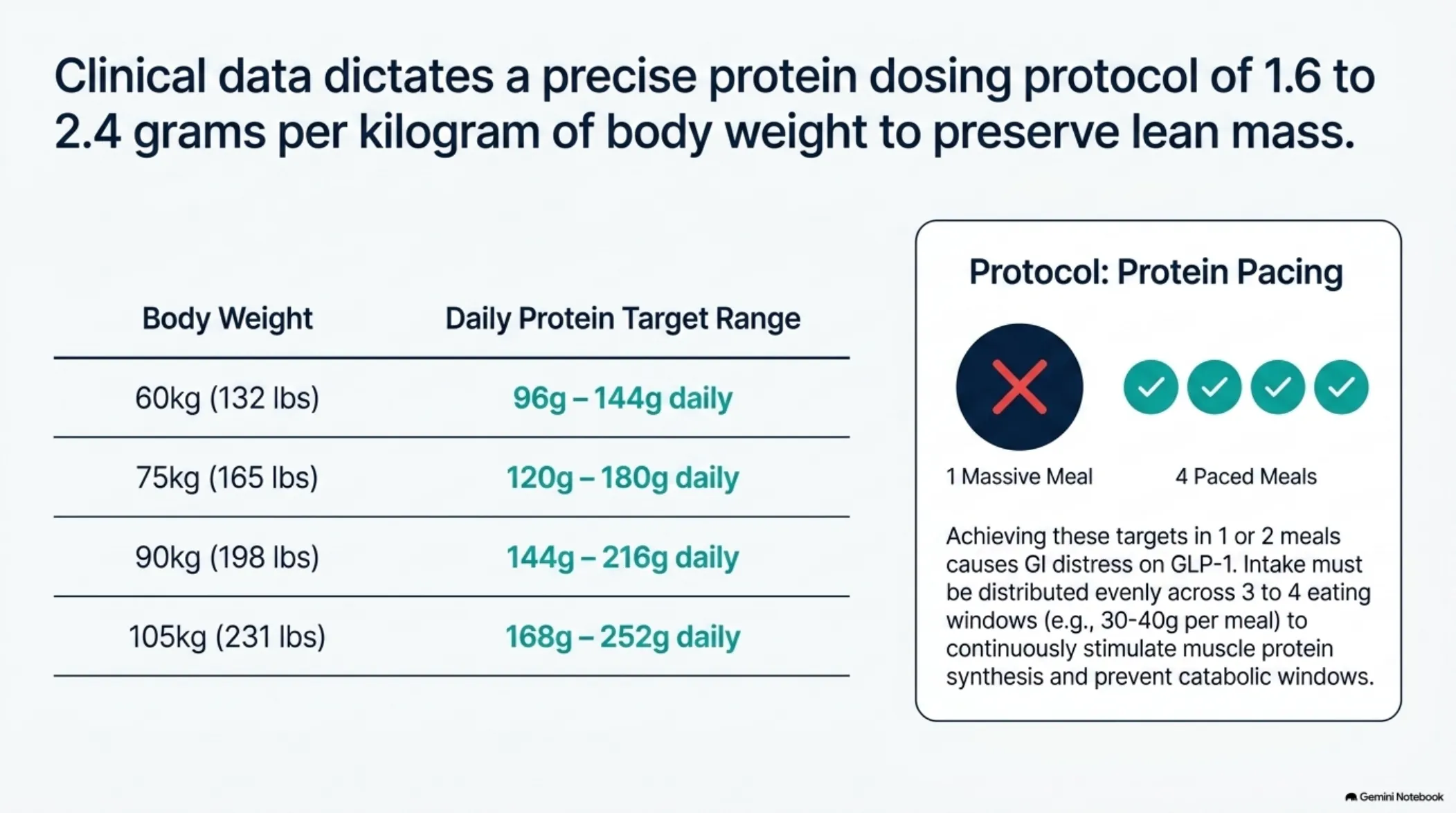
- Clinical data dictates a precise protein dosing protocol of 1.6 to 2.4 grams per kilogram of body weight to preserve lean mass.
- Daily protein targets: 60 kg (132 lbs) 96-144 g, 75 kg (165 lbs) 120-180 g, 90 kg (198 lbs) 144-216 g, 105 kg (231 lbs) 168-252 g. Hitting those targets in one or two meals causes GI distress on GLP-1, so intake has to be spread evenly across three to four eating windows (roughly 30-40 g per meal) to continuously stimulate muscle protein synthesis and prevent catabolic windows.
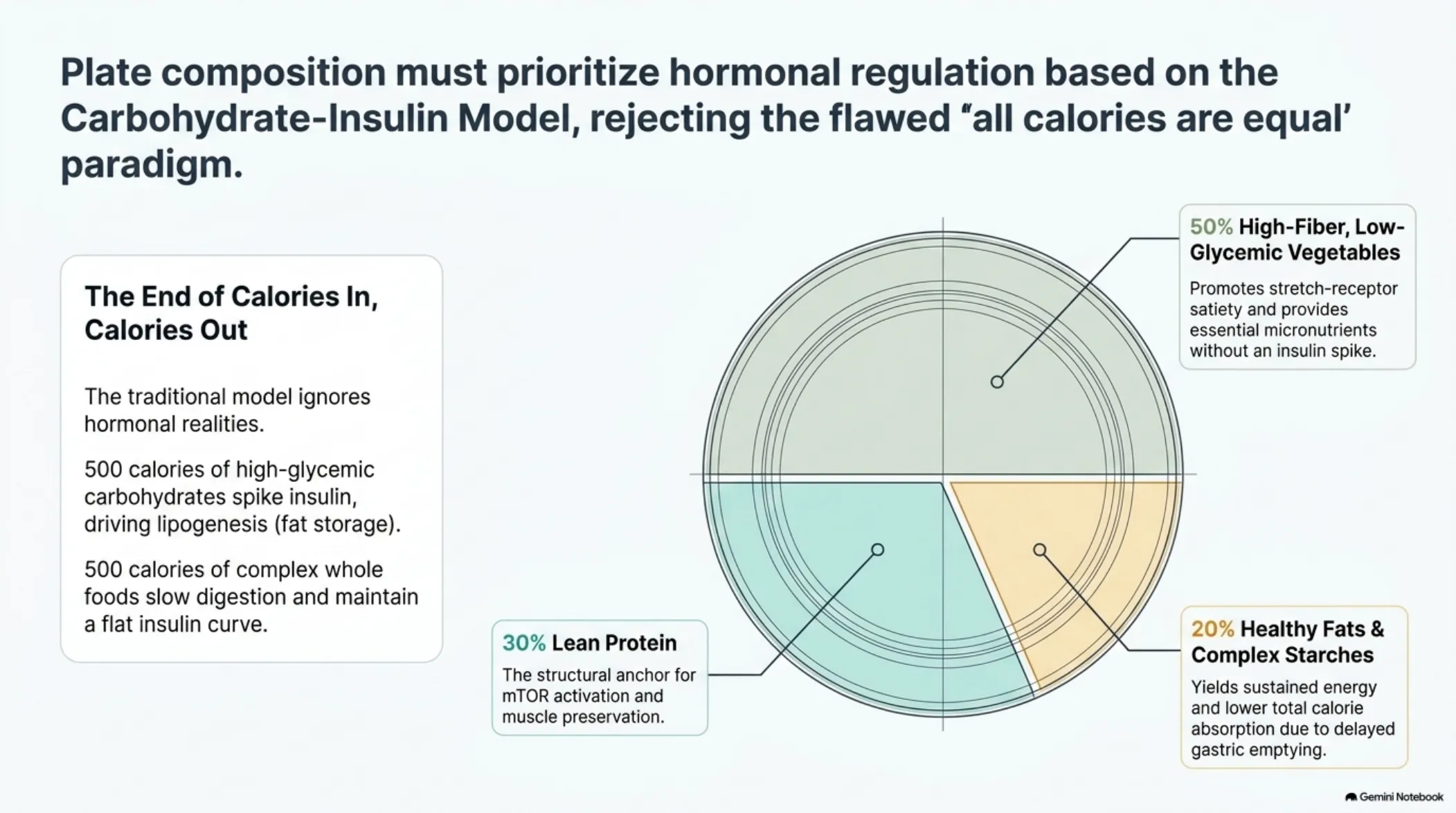
- Plate composition must prioritize hormonal regulation based on the Carbohydrate-Insulin Model, rejecting the flawed "all calories are equal' paradigm.
- The End of Calories In, Promotesstretch-receptor satietyandprovides Calories Out essentialmicronutrients withoutaninsulinspike.
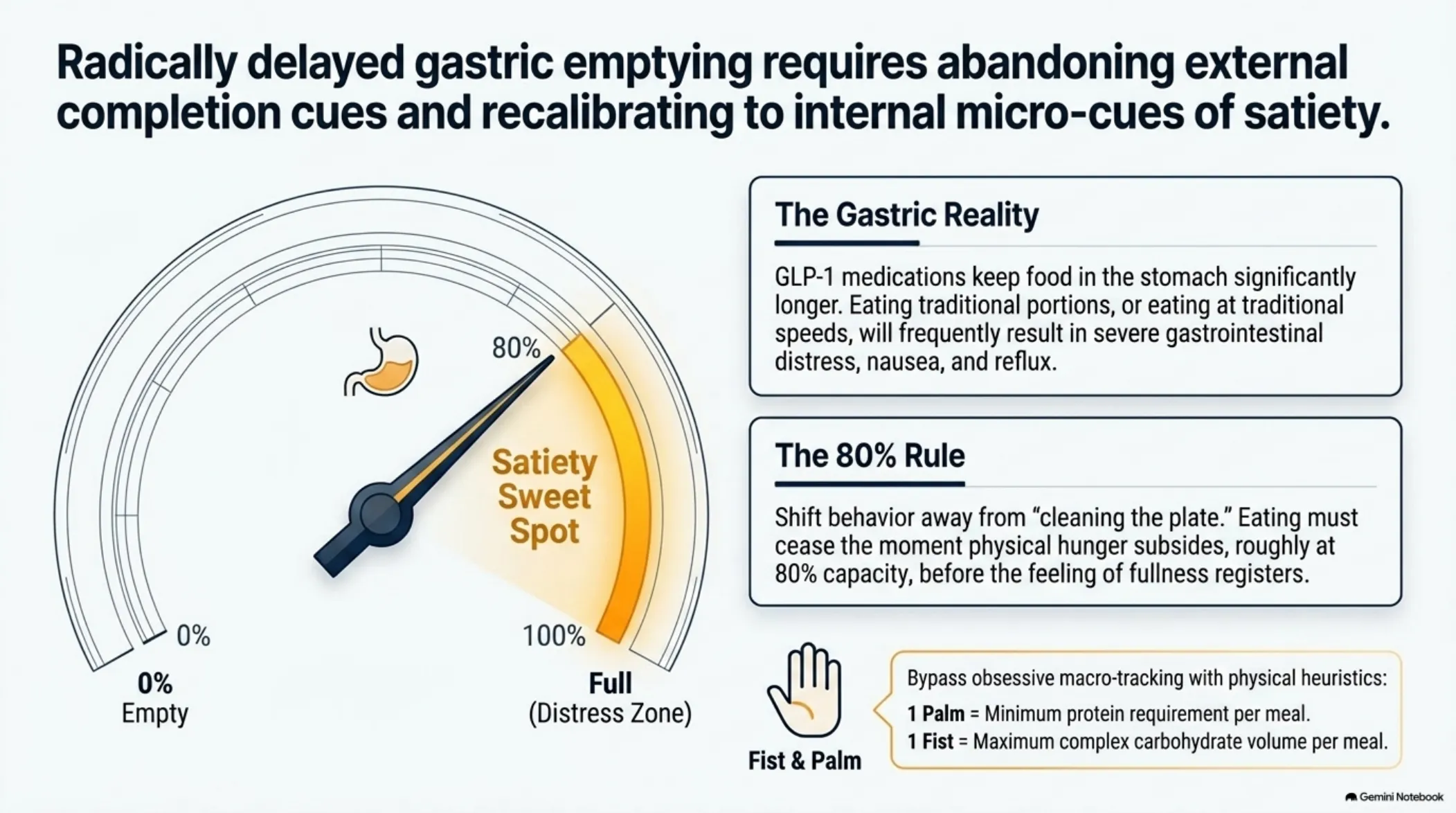
- Radically delayed gastric emptying requires abandoning external completion cues and recalibrating to internal micro-cues of satiety.
- GLP-1 medications keep food in the stomach significantly longer.
- Eating traditional portions, or eating at traditional speeds, will frequently result in severe gastrointestinal 80% distress, nausea, and reflux.
- Shift behavior away from "cleaning the plate." Eating must Spot cease the moment physical hunger subsides, roughly at 80% capacity, before the feeling of fullness registers.
- Bypass obsessive macro-tracking with physical heuristics Empty (Distress Zone) 1 Palm =Minimum protein requirement per meal.
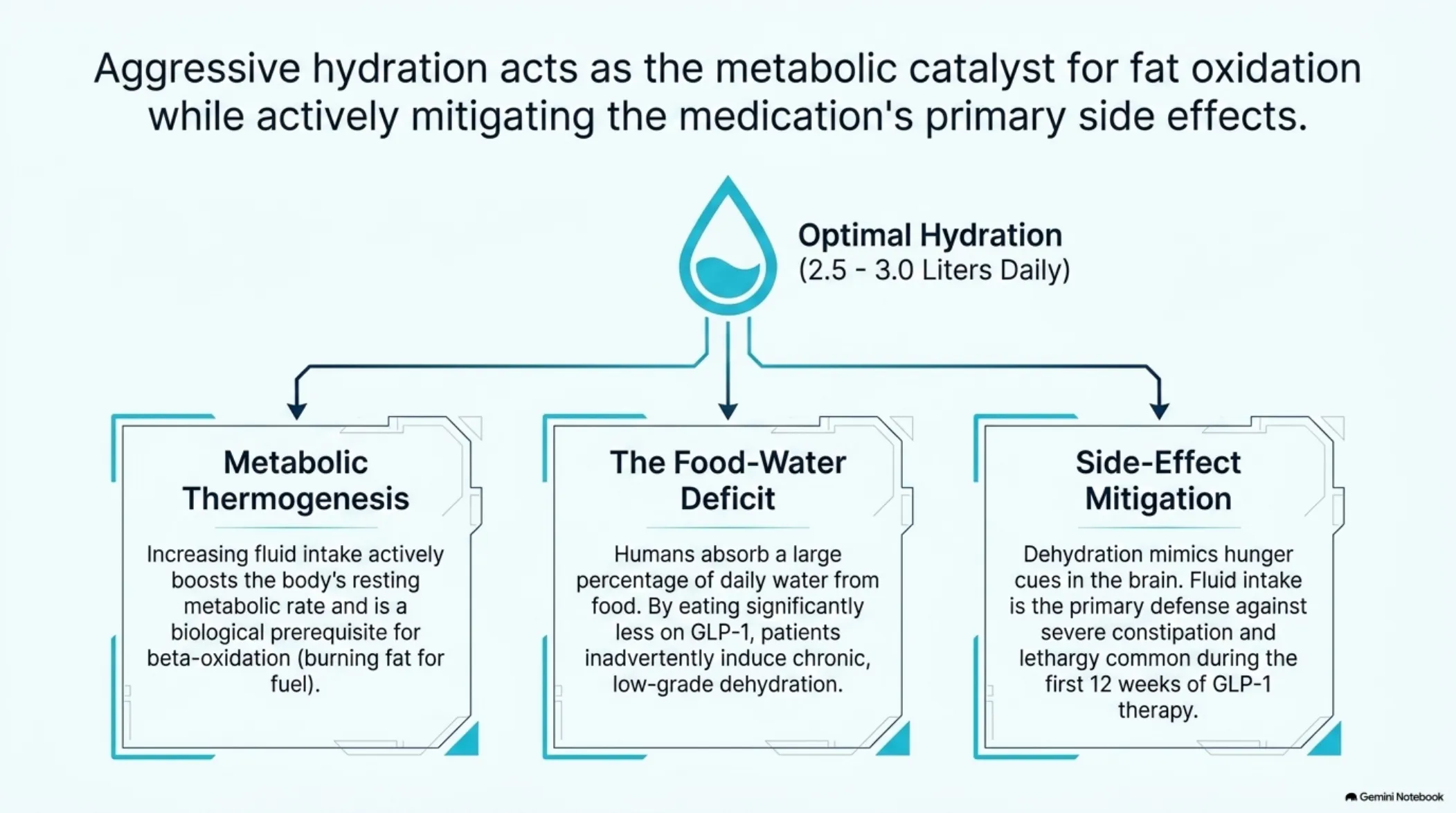
- Aggressive hydration acts as the metabolic catalyst for fat oxidation while actively mitigating the medication's primary side effects.
- (2.5 - 3.0 Liters Daily) Metabolic The Food-Water Side-Effect Thermogenesis Deficit Mitigation Increasing fluid intake actively Humans absorb a large Dehydration mimics hunger boosts the body's resting percentage of daily water from….
1 / 10